
Many times, Uganda media reports are believed to be event based, with few practicing day two journalism, creating less impact and limiting information dissemination of the aftermath to respective audiences.
Among the most affected news aspects in reporting is drowning, where in most cases stops at tragedy point without follows, some due to information gap but also limited experts especially by police authorities lack adequate information besides making deaths confirmations.
During a Media Training on Uganda’s National Drowning Prevention Strategy organised by the Global Health Advocacy Incubator at National ICT Hub in Kampala, Hope Mafaranga, Media Coach, inculpated for always giving attention to celebrity news related content and failing to treat drowning as a public health concern worthy paying much attention to.
“The November 24, 2018 Mitima Beach tragedy had less numbers of causalities compared to water related accidents but I wonder why the attention it received is given to other drown cases as public health concern.” Mafaranga noted.
Marafanga also asked journalists to be aware about how better journalism can save lives beyond reporting about tragedies by creating more public awareness through several publications and programmes.
“Coverage often happens only after fatalities and little follow-up on investigations, prosecutions, or prevention measures and yet media can do better than mere report.” Mafaranga said.
Mafaranga expressed dismay over fake marine protective gear on the market, exposing people operating near water to drowning risks.
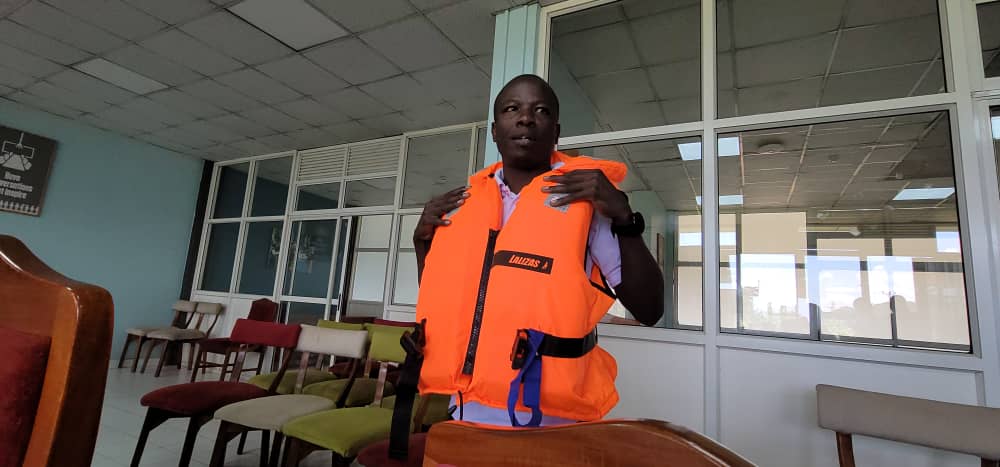
Mukose Arnold Anthony, Digitalk TV journalist trying out an original life jacket, on February 20, 2026. Photo Credit, Iga Stuart.
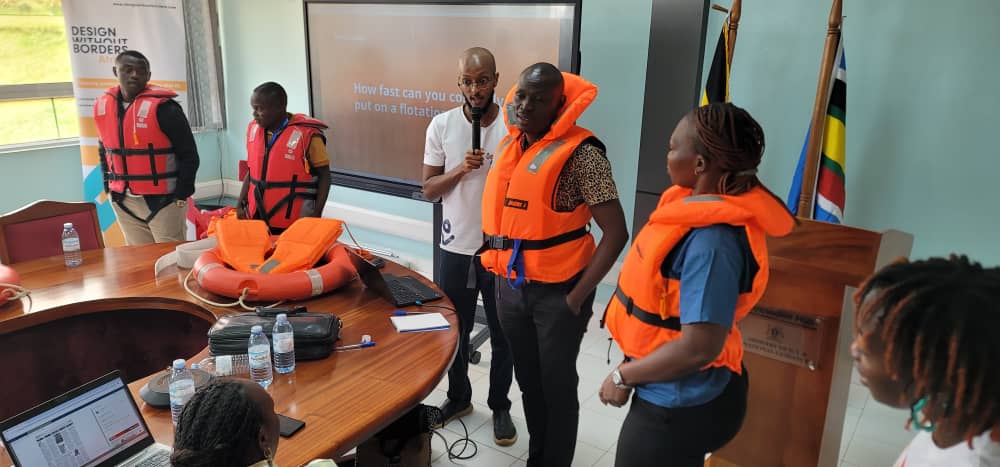
During the training, a team from Design without Boarders (experts in creating industrial, product, and service solutions) showed journalists on how to distinguish fake and original marine protective gear, ranging from Buoyancy and material, visibility, hardware, labels to safety items.
It was during the session, that journalists came to know that thickness/heaviness in material used in original gear is far higher compared to the fake ones with no safety items like whistle, crotch straps.
It was also understood that most fake gear are cheap, with no United States Coast Guard (USCG) Approved and Underwriters Laboratories (UL) logos and Certified personal flotation devices (PFDs).
Journalists were further equipped on how to interpret statistical data to lay man’s understanding of information.
According Onyum Charles Okao, Communications and Media Consultant, Drowning Prevention (DP), Uganda, expressed dismay over poor drowning reporting in media, attributed to bias due to lack of knowledge and data gap.
Onyum advocated for and increased media reporting on the drowning as one of the best ways to create more awareness and influence policy making aiming at investing more in marine safety.
By; Mukose Arnold Anthony;
Digitalk TV (Programmes Director, Journalist)
mukosearnanth@gmail.com, +256701800212